
Every five years, the United States Department of Agriculture (USDA) releases updated Dietary Guidelines for Americans. The most recent guidelines were released in January 2025 and apply to the 2025–2030 period.
These guidelines are available at realfood.gov and begin with an overview of current national health statistics and the rationale for changes from previous recommendations. The website also provides practical resources, including portion-size recommendations for each food group based on individual calorie needs.
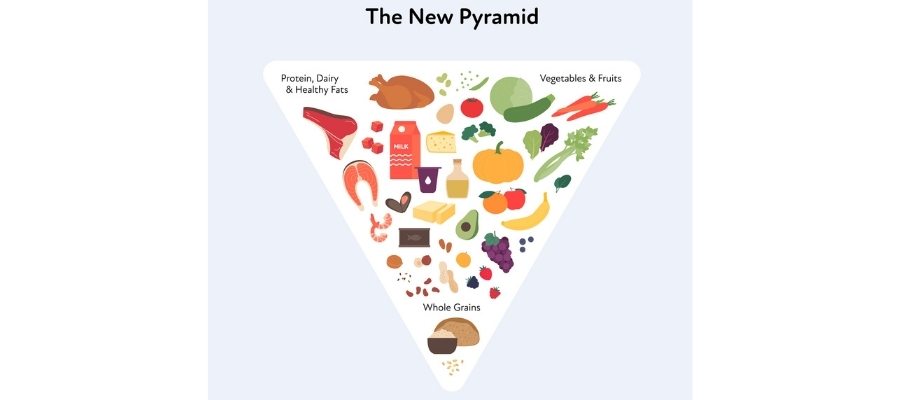
The updated guidelines emphasize the importance of consuming whole, minimally processed foods to improve overall health. For years, dietitians have encouraged individuals to shop primarily in the outer aisles of grocery stores, where whole foods are typically located. Reflecting this philosophy, the current guidelines have been significantly simplified, decreasing from more than 100 pages in the previous edition to approximately 10 pages. In addition, the traditional food pyramid has been replaced with a heart-shaped model that prioritizes protein, whole-fat dairy, vegetables and fruits, with whole grains positioned at the base.
Other notable changes include:
- A stronger emphasis on protein at every meal
- Encouragement of whole-fat dairy consumption
- Reduced grain recommendations.
Protein recommendations
The updated protein recommendation is 1.2 to 1.6 grams of protein per kilogram of body weight per day. For example, a woman weighing 120 pounds would need approximately 65 to 87 grams of protein daily. Animal-based protein sources, such as meat and seafood, provide roughly 7 grams of protein per ounce, while one large egg contains approximately 7 grams of protein. A quarter cup of lentils or legumes provides a similar amount.
A sample daily intake may include:
- Breakfast: two large eggs, providing approximately 14 grams of protein
- Lunch: a four-ounce chicken breast, providing about 28 grams of protein
- Dinner: 3.5 ounces of seafood, providing approximately 24 grams of protein
In comparison, a man weighing 190 pounds would require between 104 and 138 grams of protein per day. Doubling the example meal plan described above would meet this requirement.
Whole-fat dairy
There has been an ongoing debate regarding the benefits and risks of consuming whole-fat dairy products. Recent research trends appear more favorable toward whole-fat dairy than in the past. The current guidelines recommend up to three servings of dairy per day within a 2,000-calorie diet.
The primary concern associated with whole-fat dairy is its higher saturated fat content, which has historically been linked to elevated cholesterol levels. Previous guidelines recommended limiting saturated fat intake to no more than 10% of total daily calories, and this recommendation remains in place. However, current scientific evidence is insufficient to clearly determine whether whole-fat dairy consumption benefits or harms individuals with existing heart disease or a history of stroke. For example, consuming one cup of whole milk with each meal could result in approximately 15 grams of saturated fat per day, which is significantly higher than earlier recommendations.
Whole-grain intake
The updated guidelines recommend two to four servings of whole grains per day, a substantial reduction from the previous recommendation of six to 11 daily servings. Whole grains are associated with improved heart health, weight management and digestive function. They are also a valuable source of fiber, vitamins and minerals.
The emphasis of the current guidelines is on choosing whole grains rather than refined or processed grain products. For reference, one cup of cooked oatmeal equals approximately two servings of whole grains.
Additional dietary guidance
- Water and unsweetened beverages as primary sources of hydration
- Encouragement of fermented foods as part of a balanced diet
- A recommendation of two servings of fruit and three servings of vegetables per day
- Permission to use butter and beef tallow despite their high saturated fat content
- Discouragement of sugar-sweetened beverages, added sugars and highly processed foods
The guidelines do not specify a recommended amount of alcohol consumption but instead identify populations who should avoid alcohol entirely. Additionally, limited guidance is provided for individuals following vegan or vegetarian diets within the current edition of the Dietary Guidelines for Americans.
FIND MORE TIPS FROM NORTHSIDE HOSPITAL NUTRITION SERVICES.